


Updated on: 2026-07-06
Mindful living tools help you slow down, notice what is happening, and choose responses that support your values.
When used consistently, they strengthen attention, reduce reactive patterns, and improve daily emotional balance.
You can start with simple routines such as journaling prompts, guided breathing, and intention setting.
This guide explains practical myths, a step-by-step plan, and common questions so you can build a system that fits your lifestyle.
- Myths vs. Facts
- A Step-by-Step Guide to Mindful Living Tools
- How to Choose the Right Tools
- How to Track Progress Without Overthinking
- Frequently Asked Questions
- Summary & Key Takeaways
- Q&A Section
- About the Author
Myths vs. Facts
-
Myth: Mindfulness requires a perfect, quiet routine every day.
Fact: It is built through small moments. Consistency matters more than ideal conditions. -
Myth: Mindful living tools are only for meditation practitioners.
Fact: Journaling, breathwork, check-in prompts, and grounding exercises can support anyone. -
Myth: Tools should produce immediate results.
Fact: Progress often appears gradually as you practice noticing earlier and choosing more intentionally. -
Myth: Using tools means you will never feel stress.
Fact: Stress is normal. Mindful tools help you relate to stress with more clarity and less self-criticism.
A Step-by-Step Guide to Mindful Living Tools
Mindful living tools are practical supports that help you return to awareness when life becomes loud. The goal is not to control everything. The goal is to build a reliable pause so you can respond with intention instead of impulse.
Below is a simple structure you can follow. It works whether you have two minutes or twenty. Choose a pace you can maintain for several weeks.
-
Define one daily anchor: Select a time-based or action-based moment you already repeat. Examples include after waking, after finishing a meal, or before checking messages.
-
Pick one tool category: Choose a single focus area for the first week. Common categories include attention support, emotion regulation support, or reflection prompts.
-
Use a short practice: Start with a brief session. Many people benefit from 1 to 5 minutes, especially during busy periods.
-
Write an intention statement: Use one sentence that describes how you want to show up. Keep it grounded and specific, such as “I will pause before I react.”
-
Notice one detail: During the practice, observe a concrete aspect of the moment. This could be breath movement, posture, or surrounding sounds.
-
Close with a simple reflection: Ask, “What did I notice?” and “What is one helpful next step?”
-
Repeat for seven days: Keep the tool and the anchor consistent. If you miss a day, resume without judgment.

Clock icon, grounding shapes, intention note card visuals
How to Choose the Right Tools
The best mindful living tools are the ones you will actually use. Selection should be based on your current needs and your typical daily rhythm. A tool that looks inspiring but feels burdensome usually fails long before you gain benefits.
Match tools to a situation
-
If you feel mentally scattered: Choose attention support tools such as single-breath check-ins, short guided prompts, or a simple “reset” routine.
-
If you feel emotional overload: Choose emotion regulation tools such as labeling feelings, grounding exercises, or a short journaling practice that separates facts from interpretations.
-
If you feel stuck in the past: Choose reflection tools that focus on lessons and next steps, rather than repeated rumination.
-
If you feel pressured by routines: Choose gentle intention rituals that do not require complex setup or special environments.
Use cues you already trust
Tools become more effective when paired with cues you naturally encounter. A cue can be a location (desk, bedside), a habit (after coffee), or a transition (before a meeting). The cue reduces decision fatigue and increases follow-through.
Consider supportive everyday objects
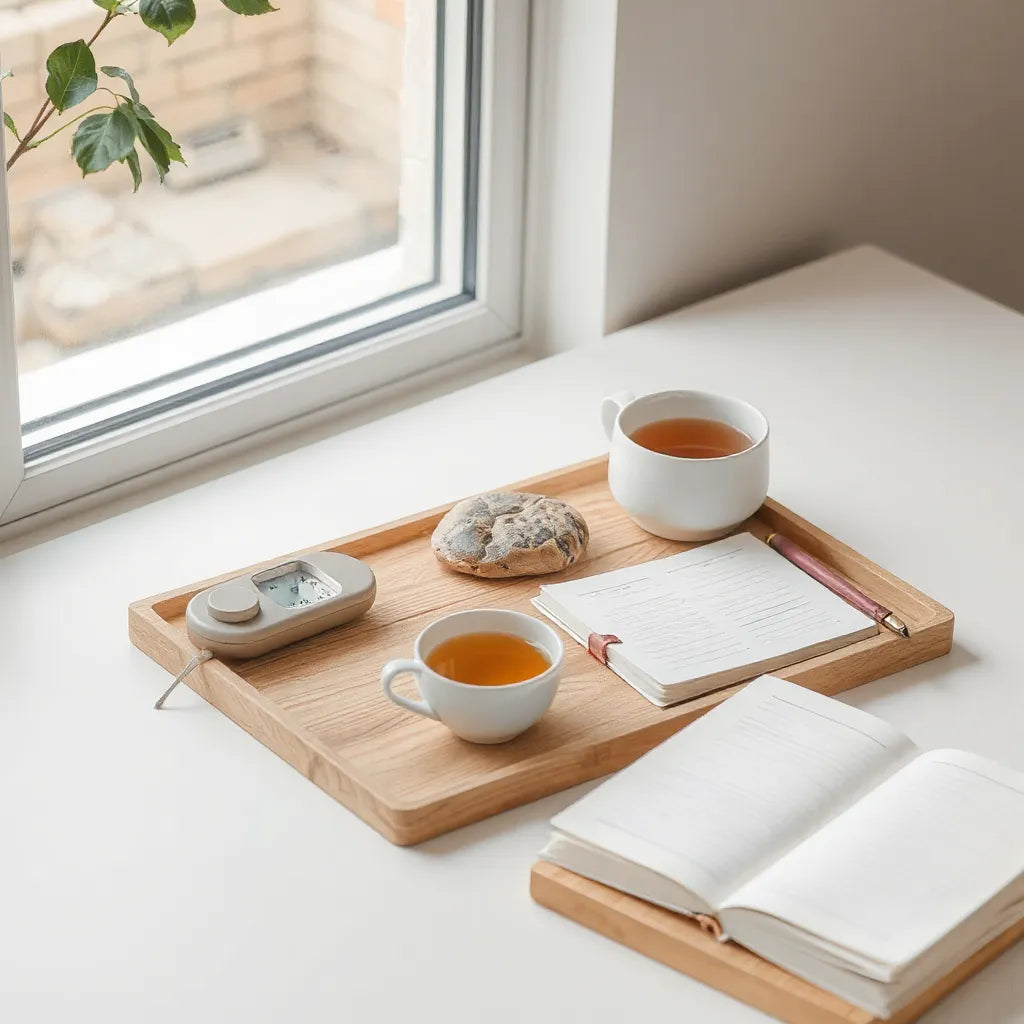
Many people prefer using tools that blend into daily life. For example, a journal can make reflection feel approachable. A comforting cup or mug can become a ritual cue before you begin work or wind down. If you want a mindful framework that still feels like ordinary life, select tools that support your routine rather than demanding extra time.
For inspiration on reflection and intention-led routines, you can explore a journal option here: Intention journal.
To reinforce energy boundaries during the day, you may also like: Energy protection apparel.
How to Track Progress Without Overthinking
Mindfulness progress is often subtle. You may not notice huge changes immediately, but you can observe improvements in timing, awareness, and response style. Tracking should reduce stress, not create a new performance task.
Track behaviors, not feelings
Instead of judging whether a day felt “good” or “bad,” track what you did. Helpful metrics include whether you took a pause, whether you wrote a reflection prompt, and whether you returned to your intention after getting distracted.
Use a simple weekly review
- One win: Identify one moment you responded with more awareness than usual.
- One friction point: Note when you skipped or rushed the tool.
- One adjustment: Choose a small change, such as moving your anchor time by fifteen minutes or shortening the practice.
Avoid the “all or nothing” trap
It is normal to miss a day. The most important pattern is recovery. If you return quickly, you strengthen your system. Over time, mindful living tools help you notice earlier, which gives you more options in real time.

Weekly checklist, clock reset arrows, reflection pages imagery
Frequently Asked Questions
How long should I use mindful living tools each day?
Start with a duration you can maintain. Many people begin with 1 to 5 minutes daily and expand only after the routine feels natural.
Do I need multiple tools to see results?
No. One tool used consistently usually performs better than several tools used sporadically. After a few weeks, add a second tool only if it supports your current anchor.
What if I cannot focus during the practice?
Distraction is not failure. The practice includes noticing distraction and gently returning to the chosen detail. Each return builds the skill.
Summary & Key Takeaways
Mindful living tools help you cultivate awareness through repeatable practices. You do not need a complex setup. A simple anchor, one tool category, and brief daily use can create meaningful change over time. If you want a routine that feels consistent and sustainable, focus on behaviors, review weekly, and adjust gently. When you are ready, choose one tool to begin today and commit to a short, realistic cycle.
Q&A Section
What are practical mindful living tools for beginners?
Begin with three low-friction options: a short breath check-in, a single journaling prompt, and an intention sentence tied to an existing habit. Keep the sessions brief and repeat them at the same anchor time to build reliability.
How do mindful living tools help with decision-making?
These tools create a pause between stimulus and response. That pause improves clarity, which supports choices aligned with your values. Over time, you become more aware of impulses and more skilled at selecting actions you can stand behind.
Can I use mindful living tools during stressful workdays?
Yes. Choose tools that fit interruptions. Examples include a two-breath reset, a quick grounding routine, or a short reflection note at the end of a task. The goal is not perfection; it is returning to awareness even when your schedule is demanding.
How should I handle days when I do not want to practice?
Lower the bar. Instead of stopping completely, reduce the practice to the smallest version: one breath cycle, one sentence of intention, or one journaling line. Continuity matters, and the reduced version often helps you re-enter the routine.
Do mindful living tools replace therapy or coaching?
Mindful living tools can support self-awareness, but they do not replace professional care when you need it. If you are facing persistent challenges, consider working with a qualified professional alongside your personal practices.
About the Author
Vansa (Meraki Daydream) is an author and content creator focused on mindful routines, reflective journaling, and practical self-awareness systems for everyday life. Their work emphasizes sustainable habits, thoughtful attention, and clear frameworks that help readers build calm in real-world settings. Vansa approaches mindful living tools with an evidence-informed, experience-based mindset. You are welcome to start small, and you can improve one intentional moment at a time.
Disclaimer: This article is for educational purposes only and does not provide medical or mental health advice. If you are dealing with serious concerns, consider consulting a qualified professional for personalized guidance.
The content in this blog post is intended for general information purposes only. It should not be considered as professional, medical, or legal advice. For specific guidance related to your situation, please consult a qualified professional. The store does not assume responsibility for any decisions made based on this information.

 https://merakidaydream.com

分享並獲得 15% 折扣!
只需在以下社交網路之一上分享此產品,您就可以享受 15% 的折扣!