


Updated on: 2026-07-08
Spirituality and self-love community practices help people create steadier inner language. When you join a supportive group, reflection becomes easier and habits become more consistent. This approach supports emotional regulation through daily rituals and shared guidance. With clear boundaries and intentional participation, you can grow without losing your individuality.
- What a spirituality and self-love community does well
- How to choose a community aligned with your values
- How to practice spirituality and self-love with others
- Rituals that strengthen self-trust over time
- Boundaries and accountability for healthy growth
- How to measure progress beyond “feeling good”
- FAQ
- Closing thoughts
- About the Author
What a spirituality and self-love community does well
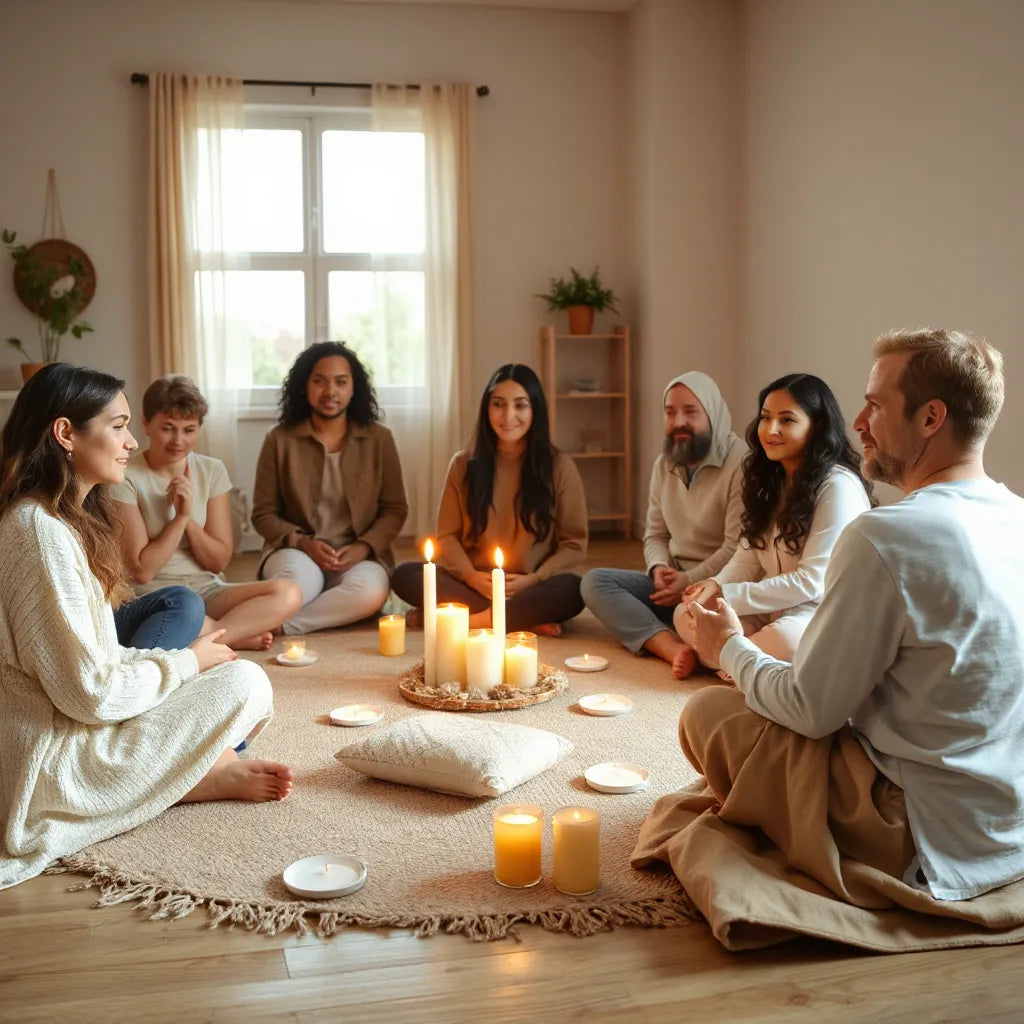
A spirituality and self-love community is more than a collection of events. It is a system for shared learning, emotional safety, and personal responsibility. People typically gather around mindfulness, reflection, and values-based living. Over time, the group culture shapes how you speak to yourself when life feels uncertain.
In a healthy community, support is not vague or performative. Guidance is practical. Members learn how to slow down, notice patterns, and respond with care. The result is often a calmer mind and a more stable sense of identity.
These communities also reduce isolation. When you realize others face similar internal struggles, shame decreases. That shift matters because self-love is not about ignoring pain. It is about meeting pain with wisdom, not harshness.

Checklist of values, calm circle, journaling prompt
How to choose a community aligned with your values
Not every group offers the same quality of care. Choosing well protects your energy and keeps your growth grounded. Begin by assessing intent and consistency. Ask whether the group encourages autonomy or dependence. A reliable community helps you think clearly and act responsibly.
Consider the communication style. Safe spaces use respectful language and discourage ridicule. They also clarify expectations for participation. Look for facilitation that honors different backgrounds and learning speeds.
Next, evaluate content focus. A spirituality and self-love community should prioritize skills that you can apply in daily life. This includes journaling prompts, grounding practices, and compassionate goal setting. If most conversations center on certainty, fear, or pressure, reassess. Growth should feel empowering, not coercive.
Finally, notice how you feel after engaging. A good fit leaves you steadier, more honest, and better able to choose your next step. You may still feel challenged, but not unsafe. Trust your nervous system and your ability to remain yourself.
How to practice spirituality and self-love with others
Practicing in community becomes powerful when you bring structure to it. Use the steps below to build consistency while maintaining personal agency.
Set a clear intention for the season. Write one sentence that connects spirituality with self-care, such as choosing gentleness in conversations. Keep it simple and measurable in behavior.
Choose one community activity to attend regularly. This could be a discussion, guided reflection, or accountability circle. Consistency matters more than variety.
Arrive with a question, not a performance goal. For example: What pattern keeps returning, and what would a kinder response look like today?
Practice a short grounding ritual before sharing. Take a few slow breaths, notice sensations, and name one emotion without judgment. This helps you share from clarity.
Use a “receive and verify” approach. When someone offers guidance, reflect on whether it fits your values. You do not have to adopt anything that does not resonate.
End with an action step. Identify one small behavior for the next day. Self-love becomes real through follow-through.
Follow up privately. After the group ends, write three lines: insight, boundary, and next step. This converts inspiration into usable knowledge.
Some people benefit from a tangible ritual anchor. A journal can support reflection, especially if you use it consistently. You may find value in a journal designed for intention setting, since a dedicated page structure makes it easier to track themes over time.
Over weeks, you will notice patterns: what drains you, what restores you, and what language helps you act with integrity. That awareness is the foundation of self-trust.

Calendar squares, grounding hand sign, gratitude list
Rituals that strengthen self-trust over time
Rituals are not about mysticism for its own sake. They are repeated actions that train attention and reduce decision fatigue. When you practice rituals in a spirituality and self-love community, your actions feel supported. Still, the ritual should be yours.
Here are rituals that commonly build self-trust:
Morning intention and boundary: Write one intention and one boundary. The intention guides your day; the boundary protects your energy.
Reflection journaling: Use a consistent format such as “What happened, how I felt, what I need, what I choose.” This clarifies needs without blaming.
Gratitude with specificity: List three details you appreciate. Specific gratitude strengthens optimism more than generic praise.
Body-based grounding: Perform a brief scan of tension, then soften one area consciously. This links emotion to physical signals.
Energy hygiene: Choose a reset practice when you feel overwhelmed. Examples include a short walk, sound cleansing, or setting a time limit for absorbing other people’s opinions.
Energy hygiene deserves careful interpretation. It does not mean your worth depends on the mood of others. It means you make room for your own nervous system. For people who want practical tools, mindful energy practices can be easier when you reduce clutter and keep a clear routine. If you prefer a wearable reminder, consider a simple energy-protection symbol that supports a consistent mindset cue.
When rituals are repeated, your mind learns that self-care is not a reward. It becomes a baseline. That is how self-love grows from a concept into a lived standard.
Boundaries and accountability for healthy growth
Self-love includes boundaries. Without boundaries, community support can turn into emotional overload. A spirituality and self-love community should help you honor your limits rather than ignore them.
Healthy boundaries include:
Time boundaries: You can participate without exhausting yourself. Decide how long you will stay, then respect that decision.
Content boundaries: If certain topics feel triggering, ask for resources that align with your current capacity.
Communication boundaries: Clarify how you want feedback to be given. Some people prefer gentle questions, others prefer direct language.
Expectation boundaries: You are not required to share everything. Privacy is part of self-respect.
Accountability can reinforce boundaries when it is skill-based. Instead of demanding constant emotional transparency, accountability focuses on chosen actions. For example, you may commit to one practice: journaling for five minutes after meetings, or choosing one calming ritual after conflict. This kind of accountability respects dignity.
If you use community prompts, consider pairing them with a physical or daily reminder. Many people enjoy self-love tools that keep intentions visible, such as a daily-use item that reinforces hydration and intention. Even when you do not follow a “mystical” interpretation, a consistent cue helps you return to your values.
How to measure progress beyond “feeling good”
Many people expect growth to feel joyful. Real progress usually looks different. It shows up as better choices, clearer boundaries, and less self-attack after mistakes. Measuring progress prevents you from abandoning practices during challenging seasons.
Use these evidence-based reflections:
Recovery time: After stress, do you return to calm sooner than before?
Self-talk quality: Are your inner sentences more supportive and specific?
Action alignment: Do your behaviors match your values more often?
Boundary clarity: Can you say no without spiraling?
Relationship patterns: Do you communicate needs more clearly and less defensively?
Consider tracking themes rather than moods. A spirituality and self-love community often helps members notice recurring beliefs. You can then replace old beliefs with new, kinder frameworks. This is how spiritual practice becomes practical psychology.
One additional marker is learning to ask for support. People who practice self-love often realize that needing help is not weakness. It is a sign of maturity.
FAQ
How do I know whether a spirituality and self-love community is safe for me?
A safe community is consistent, respectful, and autonomy-friendly. You should be able to participate without pressure, ridicule, or demands for constant disclosure. After sessions, you should generally feel clearer and more grounded, even if the content was challenging.
What should I do if I feel overwhelmed during group discussions?
Use grounding first. Pause, breathe slowly, and remind yourself that you can take a break. You can also set a time boundary and step away when needed. Afterward, write one sentence about what you felt and one action you will take to care for yourself.
Can I practice self-love even if my spiritual beliefs change over time?
Yes. Self-love is not dependent on one belief system. You can keep the principles that support kindness, clarity, and responsibility. A good community will allow your practice to evolve without judgment.
Closing thoughts
Spirituality and self-love grow faster when your environment supports them. A well-run community can offer structure, reflection, and accountability while still protecting your individuality. Choose participation that feels safe, practice with consistency, and measure progress through actions, recovery, and boundary clarity.
If you are ready to take the next step, begin small: attend one session, complete one follow-up reflection, and choose one daily ritual. Over time, the community becomes a mirror that helps you recognize your own worth.
About the Author
Vansa (Meraki Daydream) is a content creator focused on reflective living, values-based mindset practices, and community-driven self-care. Her work emphasizes practical spirituality, gentle accountability, and everyday rituals that support self-respect. With expertise in building engaging, intention-led brand experiences, she helps readers translate inspiration into stable habits. Thank you for reading, and may your next practice be the one that strengthens your inner confidence.
Disclaimer: This article is for educational purposes only and does not provide medical, mental health, or professional advice. If you need support for personal wellbeing, consider consulting a qualified licensed professional.
The content in this blog post is intended for general information purposes only. It should not be considered as professional, medical, or legal advice. For specific guidance related to your situation, please consult a qualified professional. The store does not assume responsibility for any decisions made based on this information.

 https://merakidaydream.com

分享並獲得 15% 折扣!
只需在以下社交網路之一上分享此產品,您就可以享受 15% 的折扣!